March 23, 2019

Repairing a Broken Dental Bridge

Author

Dr. Charles Payet

Dr. Charles D. Payet

Date

March 23, 2019

Share

Close-up of a person's smile with bright, white, even teeth. Pink lips and skin are visible.

If you have a dental bridge and some of the porcelain has broken off in a place visible in your smile, the bridge usually has to be replaced.  Sometimes however, the bridge can be repaired with a creative and nifty technique called an “overcrown.”  This isn’t always an option, but when it is, it’s a great way to save you money and time at the dentist.

Repairing is Less Expensive than Replacing

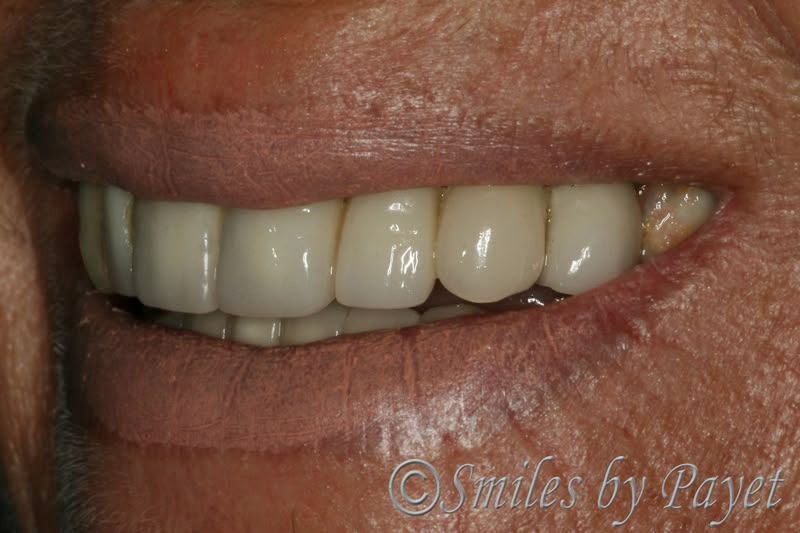
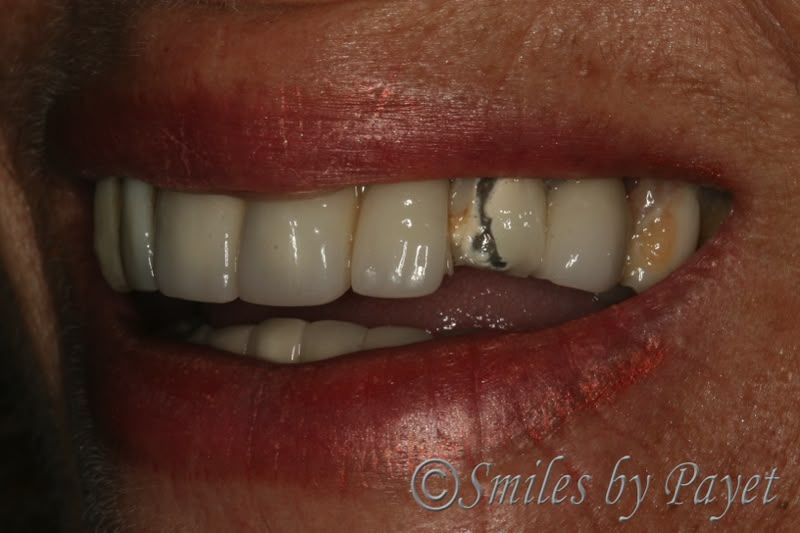
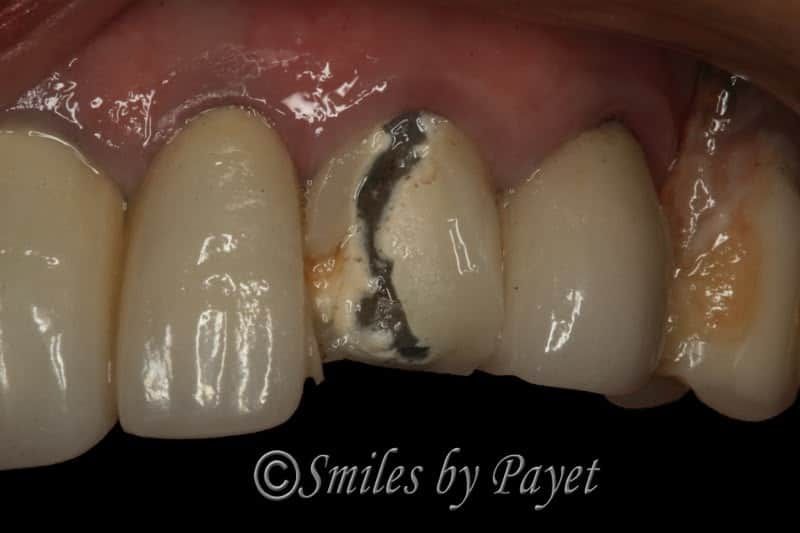
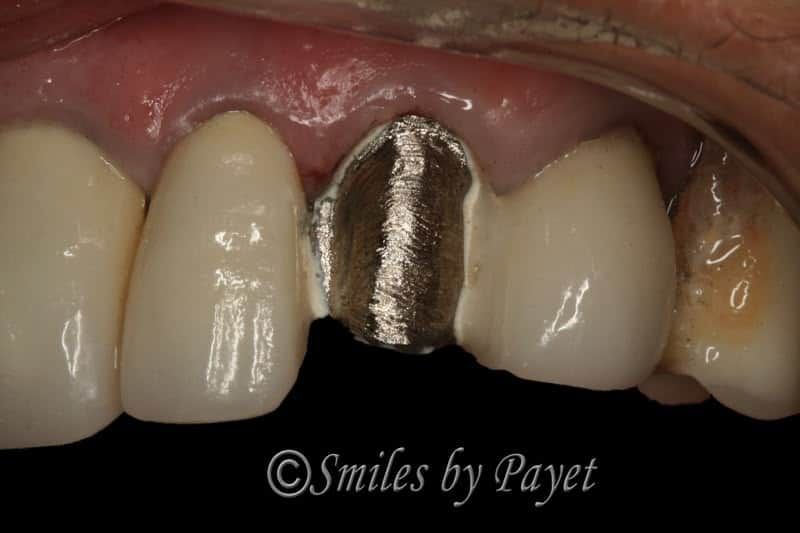
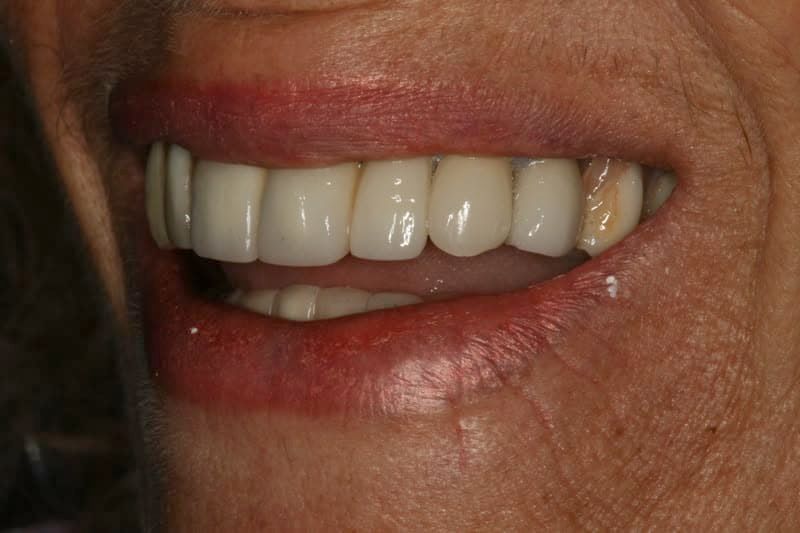
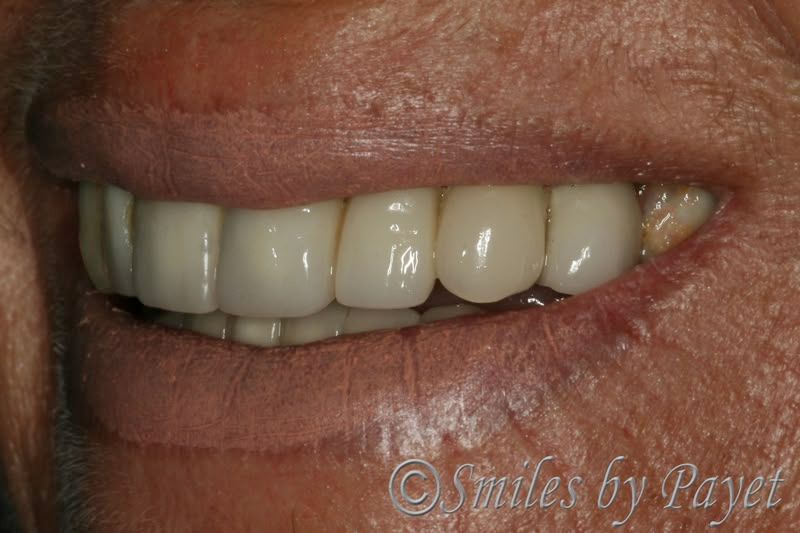
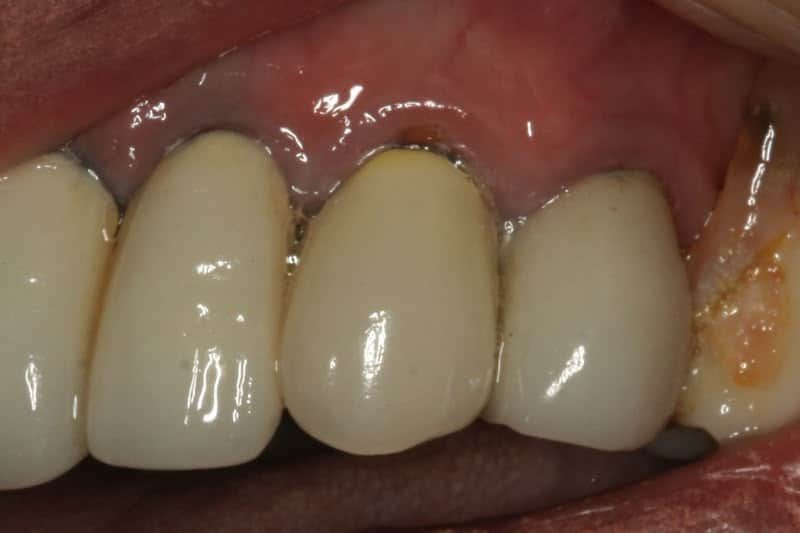
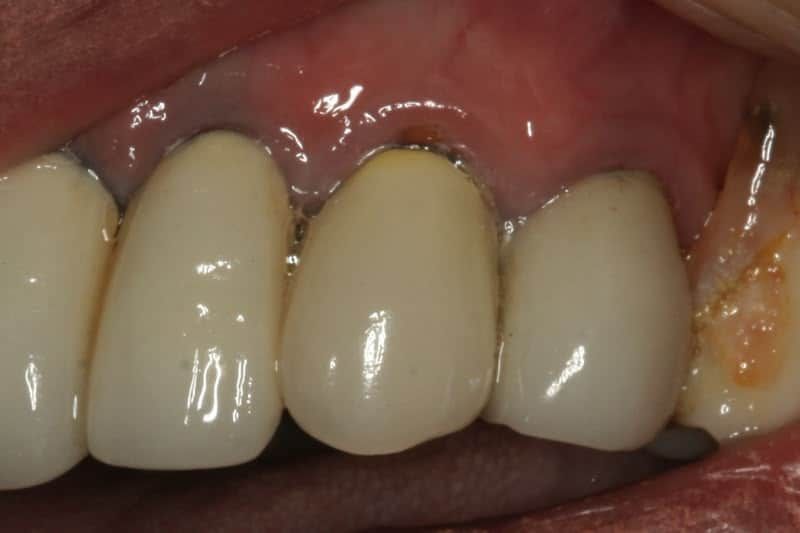
Our patient M., as we’ll call her, has been with our practice since late 2006.  She had some well-done dental work many years before, including long PFM (Porcelain-fused-to-Metal) dental bridges.  In the spring of 2008, however, she broke a big piece of porcelain off a top front tooth.  The bright silver shining through really bothered her.  She didn’t want to replace the whole thing, because it cost too much.  I’d recently learned the “overcrown” technique through a professionals-only dental forum.  Given it was the only option except for replacement, she let me try.  I think you’ll agree – it turned out pretty well!

Close-up of a person's mouth. Damaged teeth are visible next to newer dental work. Red lipstick.
Close-up of teeth. Damaged central incisor with dark filling and surrounding teeth with bright, opaque surfaces.
Dental bridge with porcelain crowns and a metallic middle section.
Person smiles, revealing a set of white dental implants, some with a yellowing natural tooth. Red lips.
Close-up of a person's smiling mouth showing a set of bright white dental implants.
Close-up of teeth with dental crowns and inflamed gum tissue.
Close-up view of three dental crowns in the mouth, surrounded by gum tissue.

The basic process was similar to any other crown.  I drilled off the remaining porcelain on the broken portion of the bridge to expose the metal.  A margin, or edge, was shaped along the gumline, where the crown stops.  We made an impression, or mold, which is something we almost never do anymore, thanks to the CEREC Bluecam and the TRIOS 3 Intraoral Scanner).  We cemented a temporary crown for 2 weeks.  When the real crown came in, we cemented it like normal.

As of this blog publication date, that bridge repair with an overcrown is 11 years old, and it still looks great.

CEREC Emax Overcrown to the Rescue

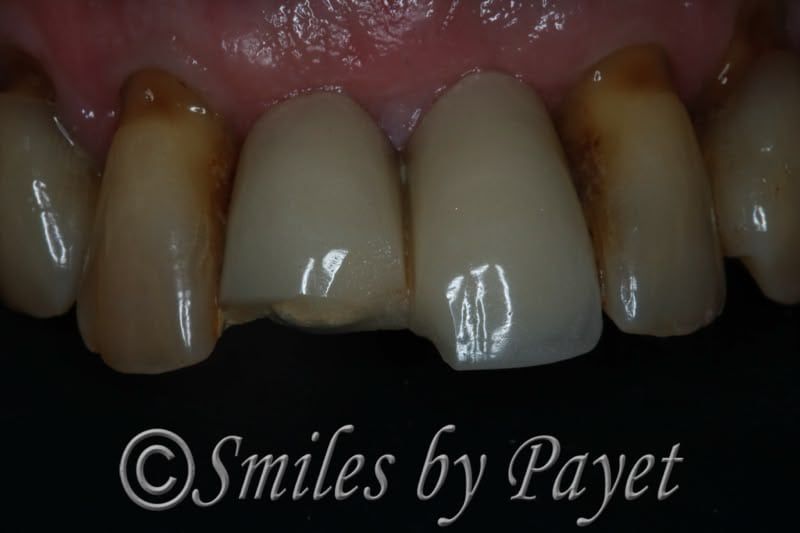
This case is more recent & was completed in March 2019.  This gentleman’s Maryland bridge, as it’s called, was more than 30 years old , and still in (mostly) great shape.  Unfortunately, he fell and hit a front tooth, breaking off a big piece. For perspective, that bridge was done 9 years before I became a dentist.  It was done the year before I started college!  The oldest and still functioning dental work I’ve done that I know of, is a 19 year old CEREC crown for my Mom. 🙂  Anyway, back to the story…..

Given the bridge is still solidly cemented and functioning, I sure didn’t want to replace it.  The patient  didn’t want to spend that much money either.  So I suggested an overcrown for him, too.  This time, we did it with with our CEREC Bluecam CAD/CAM system.  True, it is “old “technology, but it’s still among the best available. We chose a material called Celtra DUO for its strength, esthetics, and because it matched color so well.

Close-up of teeth; chipped front tooth with discoloration and gum inflammation.

Maybe one day, he’ll let me do the same for the tooth next to it, to take care of the chipped corner. He said it doesn’t bother him though, so we left it alone.

The process was similar to the previous case, but instead of taking a mold and sending it to the lab, we sprayed a thin coat of blue powder over the teeth, scanned it, designed it on the Bluecam, milled it, polished it, and bonded it in.  The whole process lasted about 75 minutes.  No numbing, only a little drilling, and a little polishing afterwards.  Not too shabby, if I do say so myself.  😀

If you need some work like this:

Call us 704-364-7069 or contact us.

Dentists
October 27, 2026
Our dentists perform oral surgery to treat damaged teeth and support long-term recovery. Read our blog to discover practical tips on preparing for treatment.
laser gum therapy
October 22, 2026
This article explains the basics of laser gum therapy, including how it works, when it may be recommended, and how it fits into ongoing your oral health care.

cosmetic dentist
October 21, 2026
This article explores various popular treatments provided by cosmetic dentists, detailing each treatment's purpose, procedure, benefits, risks, and aftercare.
September 30, 2026
Have you ever wondered whether heartburn can affect your teeth? Keep reading to learn how heartburn may impact your oral health and how a dentist can help.
September 29, 2026
Do you have fillings? Keep reading to discover why a tooth with a small filling benefits from a crown from reliable dentists.
September 28, 2026
Do you know what causes bad breath and how to treat it? Keep reading to learn how a dentist can help identify the cause and restore fresh breath.

dentists
September 24, 2026
Discover what dentists want you to know about oral health, including daily habits, preventive care, and simple ways to protect your smile.
September 23, 2026
Do babies "steal" calcium from your teeth during pregnancy? Learn the real cause of pregnancy cavities and how your dentist can help keep your smile safe.
laser gum therapy
September 22, 2026
Protect healthy tissue with laser gum therapy. Eliminate infected layers precisely, maintaining tissue height and a natural, seamless smile.
September 22, 2026
Does it hurt to chew after getting a new crown or filling? Learn why your bite might be "high" and how a quick visit to your dentist can fix the pain.
Show More